

Intarsia's Complexity: A Historical View
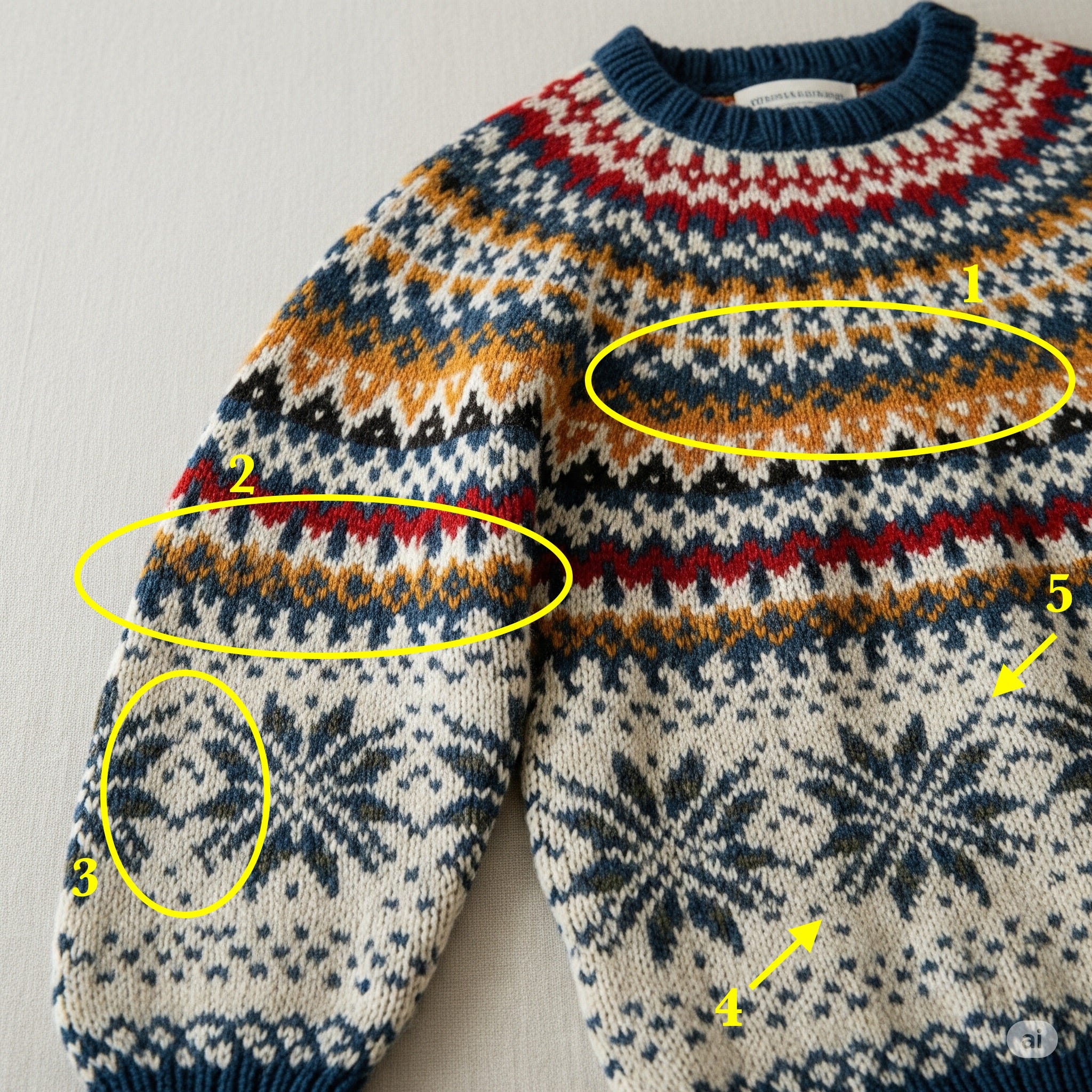
Intarsia is a colorwork technique that creates blocks of color within knitting, distinctly different from fair isle. While fair isle relies on carrying multiple yarn colors across the back of the work – creating "floats" – intarsia knits each color block separately, resulting in a cleaner, less bulky fabric. This means more ends to weave in, but a more professional finish for larger color blocks.
The technique isn’t new. Its origins can be traced back centuries, with examples appearing in traditional Scandinavian and South American knitting. Historically, it was a method reserved for experienced knitters due to the concentration and skill required. Creating an intarsia pattern meant meticulous charting, careful yarn management, and a high risk of making errors that could unravel hours of work.
Traditionally, creating an intarsia pattern involved painstaking work with graph paper, choosing colors, and carefully calculating yarn quantities. The Knitting Help video by VeryPink Knits from 2011 demonstrates the core principles of traditional intarsia, and highlights just how much manual work is involved, even for relatively simple designs. That video, with over 4 million views, speaks to both the appeal and the challenge of the technique. It’s a testament to how dedicated knitters are to mastering this beautiful, yet demanding, skill.
Because of the complexities involved, many knitters avoided intarsia, sticking to simpler colorwork methods. The time commitment, the potential for mistakes, and the sheer mental effort were significant barriers to entry. This is where the recent advancements in AI-assisted design are poised to truly revolutionize the field.
The Bottlenecks of Traditional Intarsia Design
The process of creating an intarsia chart by hand is, frankly, daunting. It begins with a design idea, then translating that idea onto graph paper, one square representing one stitch. Each color needs to be carefully planned and shaded, and you’re constantly checking to ensure the design remains cohesive and visually appealing. It’s a slow, iterative process that demands significant patience.
Calculating yarn amounts is another major hurdle. Each color block requires a separate ball of yarn, and estimating how much yarn you’ll need for each color is often a guessing game. Underestimating means a frustrating trip to the yarn store mid-project, while overestimating leads to wasted yarn and expense. Checking for errors is constant; a misplaced stitch can quickly ruin a large section of work.
Scaling a design up or down is particularly challenging. Each stitch must be adjusted, and the color proportions need to be recalculated. This makes it difficult to adapt existing designs to different sizes or to create variations on a theme. Larger, more detailed pieces become exponentially more difficult to plan and execute without assistance.
Ultimately, these limitations restrict the kinds of designs knitters attempt. Intricate landscapes, detailed portraits, or complex geometric patterns are often deemed too impractical to tackle by hand. The time and effort required simply outweigh the potential reward for many knitters.
AI Pattern Generators: A New Approach
AI-powered intarsia pattern generators are emerging as a game-changer, offering a new approach to this traditionally challenging technique. These tools leverage artificial intelligence to automate the chart creation process, significantly reducing the time and effort required. The core idea is simple: you provide the tool with an input – an image, a sketch, or even just a general idea – and it generates a complete intarsia chart for you.
These tools typically work by analyzing the input image and identifying the different color blocks. The AI then translates these blocks into a knitting chart, indicating exactly which stitches to knit in each color. While the underlying algorithms are complex, the user experience is designed to be straightforward and intuitive. You don’t need to understand how the AI works to benefit from its capabilities.
The primary benefit is a dramatic reduction in design time. What once took hours or even days can now be accomplished in minutes. This opens up new possibilities for knitters, allowing them to tackle more ambitious projects and experiment with more complex designs. However, it’s important to remember that these tools are still relatively new, and the quality of the output can vary depending on the tool and the complexity of the input.
These generators aren’t about replacing the knitter, but empowering them. They handle the tedious aspects of chart creation, freeing up the knitter to focus on the creative aspects of the project – choosing yarns, refining the design, and enjoying the process of bringing their vision to life.
Current Tools and Their Capabilities
The market for AI-assisted intarsia pattern generators is still developing, but several tools are beginning to gain traction. While a definitive, universally accepted "best’ tool doesn’t yet exist, some stand out for their capabilities and ease of use. It"s important to note that pricing and features can change rapidly, so verifying current information is crucial.
Several online platforms allow users to upload an image and have it automatically converted into an intarsia chart. These tools often offer options to adjust the level of detail, the number of colors, and the yarn weight. Some platforms also provide yarn estimation tools, helping you determine how much yarn you’ll need for each color. File formats supported typically include PNG, JPG, and SVG. Limitations often include difficulty handling complex gradients or images with a large number of colors.
Many tools are web-based, accessible through a subscription model. A few offer one-time purchase options, but these are becoming less common. While specific pricing varies, expect to pay anywhere from $10 to $30 per month for access to premium features. Free trials are often available, allowing you to test the tool before committing to a subscription.
One common limitation across these tools is the need for manual adjustments. The AI-generated charts are rarely perfect and often require some editing to correct errors or refine the design. The best tools provide intuitive editing features, allowing you to easily modify the chart and customize the pattern to your liking. The accuracy of color separation is also a key factor – some tools struggle with subtle color variations.
AI Intarsia Pattern Generator Comparison (2026)
| Tool Name | Input Methods | Customization Options | Output Format | Ease of Use |
|---|---|---|---|---|
| Colorweave AI | Image Upload, Sketch | Extensive color palette control, Yarn weight influence, Gauge adjustment | Chart and written instructions | Moderate |
| PatternCraft | Text Description, Image Upload | Color palette limitations, Basic yarn weight selection | Chart only | Easy |
| IntarsiaGen | Sketch, Simple Shapes | Limited color options, Focus on geometric designs | Simplified chart | Very Easy |
| KnitAI Designer | Image Upload, Text Prompt | Good color control, Some yarn weight influence, Needle size suggestion | Chart and row-by-row instructions | Moderate to Difficult |
| StitchForge | Image Upload | Moderate color control, Limited yarn weight options | Chart and basic notes | Easy |
| YarnPainter | Text Description | Strong color blending features, Limited shape control | Color-blocked chart | Moderate |
Qualitative comparison based on the article research brief. Confirm current product details in the official docs before making implementation choices.
Beyond Chart Generation: AI-Driven Assistance
The most promising AI tools aren't stopping at just chart generation. They’re expanding to offer a suite of features designed to assist knitters throughout the entire process. Yarn estimation is becoming increasingly accurate, taking into account factors like stitch gauge, yarn weight, and the size of the design. This can save knitters a significant amount of money and prevent frustrating yarn shortages.
Some tools now provide row-by-row instructions, guiding you through the knitting process step-by-step. This is particularly helpful for complex designs or for knitters who are new to intarsia. Color management features are also emerging, suggesting color palettes that complement each other and minimizing yarn waste. These tools can even help you substitute colors based on your existing yarn stash.
Beyond the basics, some platforms can adapt a pattern to different gauge or needle sizes, ensuring a perfect fit. This is a huge time-saver for knitters who want to customize a pattern to their specific needs. AI is also being explored for troubleshooting common intarsia mistakes, such as dropped stitches or twisted yarns.
This level of assistance is transforming intarsia from a daunting challenge into an accessible and enjoyable experience. It’s not just about creating a chart; it’s about providing a complete toolkit for successful intarsia knitting.
The Impact on Design: What's Becoming Possible
AI-assisted intarsia is already having a noticeable impact on design. We’re seeing knitters tackle projects that were previously unthinkable – incredibly detailed landscapes, realistic portraits, and complex geometric patterns. Designers are pushing the boundaries of what’s possible, experimenting with new forms and techniques.
There’s a clear revival of interest in intarsia, driven by the accessibility of these new tools. Knitters who were previously intimidated by the technique are now confidently exploring its possibilities. This is leading to a surge in creativity and innovation within the knitting community. The barriers to entry have been significantly lowered.
Designs that were once reserved for professional knitters are now within reach of hobbyists. Intricate, multi-colored sweaters, detailed wall hangings, and stunning cushion covers are becoming increasingly common. The level of detail and complexity in these projects is truly remarkable.
For example, a knitter wanting to recreate a Van Gogh painting as an intarsia sweater, a project that would have taken months of painstaking work, can now generate a usable chart in a matter of hours. This democratization of design is empowering knitters to express their creativity in ways they never thought possible.
Challenges and Future Development
Despite the significant advancements, AI intarsia generators still face several challenges. Imperfect conversions remain a common issue, requiring manual adjustments to correct errors or refine the design. Fine details can be particularly difficult for the AI to reproduce accurately, and complex gradients often result in banding or color distortion.
The need for manual adjustments is a significant bottleneck. While the AI handles the bulk of the work, knitters still need to carefully review the generated chart and make any necessary corrections. Improving the accuracy and reliability of the AI is crucial for reducing the amount of manual effort required. Better color palette suggestions and more accurate yarn estimation are also key areas for improvement.
Future developments are likely to focus on seamless integration with knitting machines. Imagine being able to upload a design and have it automatically knitted by a machine, with the AI handling all the color changes and stitch patterns. This would revolutionize the entire knitting process.
We might also see AI-powered real-time error correction – the AI detecting and correcting mistakes as you knit. Personalized pattern recommendations, based on your skill level and preferences, are another exciting possibility. The potential for AI to transform intarsia knitting is enormous, and we’re only just beginning to scratch the surface.

No comments yet. Be the first to share your thoughts!