

Why loom knitting wins for beginners
Loom knitting has quietly become the preferred entry point for new crafters, offering a gentler and faster introduction to the craft than traditional needles. If you have ever struggled with dropping stitches or felt the tension in your wrists during a long session, a loom solves those problems by design. The pegs hold your stitches securely, turning a potentially frustrating learning curve into a manageable, rhythmic process.
The most immediate advantage is visibility. With needles, you often work blind or rely on feel; with a loom, every stitch is clearly visible on the pegs. This transparency makes it much easier to spot mistakes early and understand how the fabric is forming. It is less like juggling and more like following a clear, step-by-step pattern that you can see in real time.
Note: Loom knitting is significantly gentler on wrists and hands than needle knitting. The fixed pegs reduce the repetitive gripping motion required by needles, making it a comfortable option for those with arthritis or hand tension issues.
Speed is another major factor. Many beginners find they can knit faster on a loom, especially when using double-knitting techniques. While traditional knitting allows for infinite gauge adjustments, loom knitting offers a consistent, set gauge that lets you focus on the joy of creation rather than the mechanics of stitch placement. This "mindless" quality allows you to relax and enjoy the process, whether you are making a scarf or a hat.
Round looms for hats and cowls
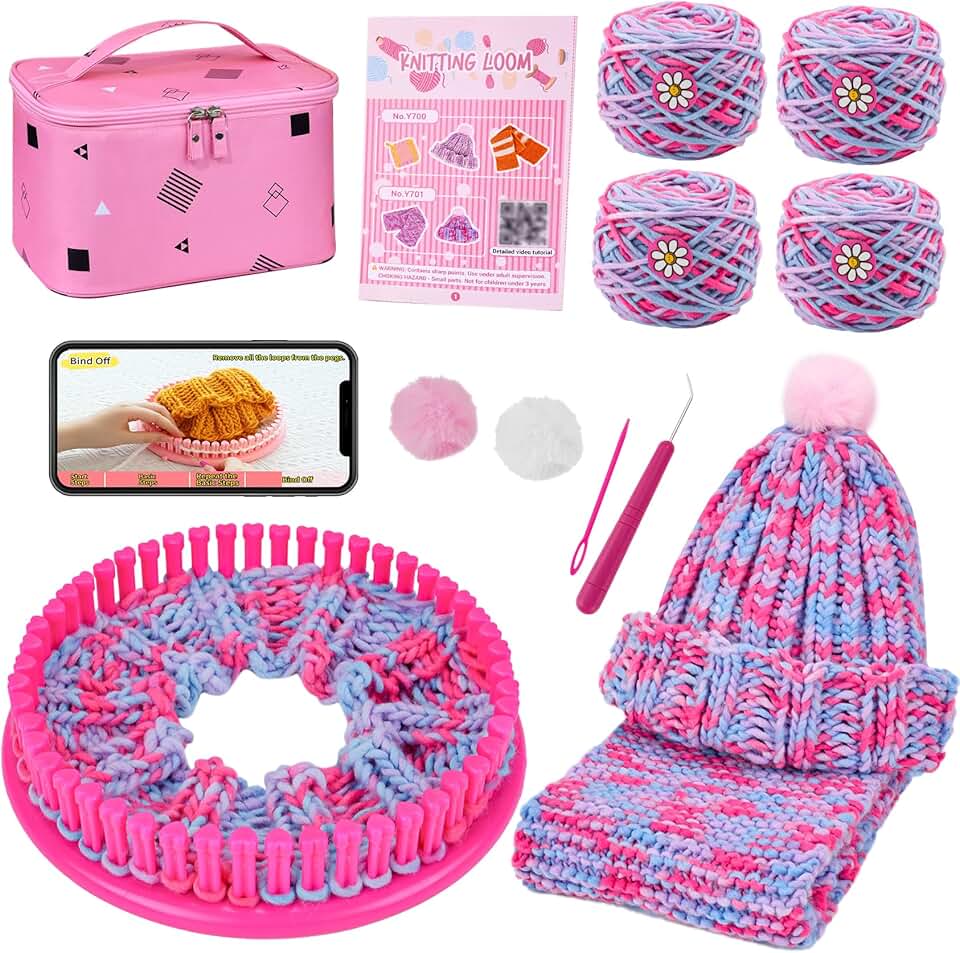
Round looms are the go-to tool for tubular projects like beanies, cowl necks, and leg warmers. Because they are circular, they knit continuously in a spiral, eliminating the need to manage multiple needles or worry about seams. This makes them an excellent choice for anyone looking to create wearable items quickly and with minimal frustration.
Understanding peg spacing and size
The most critical factor when choosing a round loom is the peg spacing, often referred to as the gauge. Peg spacing determines the thickness of the final fabric. A loom with wider spacing (like 11mm) creates a loose, drapey fabric ideal for scarves and cowls, while tighter spacing (like 6mm or 7mm) produces a denser, warmer fabric better suited for fitted hats.
Loom diameter dictates the circumference of your project. A standard 8-inch round loom is perfect for children or adults with smaller head sizes. For a standard adult beanie, look for a 9-inch or 10-inch loom. If you plan to knit larger items like wide cowls or ponchos, a 12-inch loom provides the necessary width without requiring you to seam pieces together.
Best round loom sets
Most beginner kits come with a set of three round looms (typically 8-inch, 9-inch, and 10-inch) along with a hook tool and yarn needle. This variety allows you to experiment with different projects as you learn. Look for sets made from durable, smooth plastic to prevent yarn snagging.

As an Amazon Associate, we may earn from qualifying purchases.
Flat looms for scarves and blankets
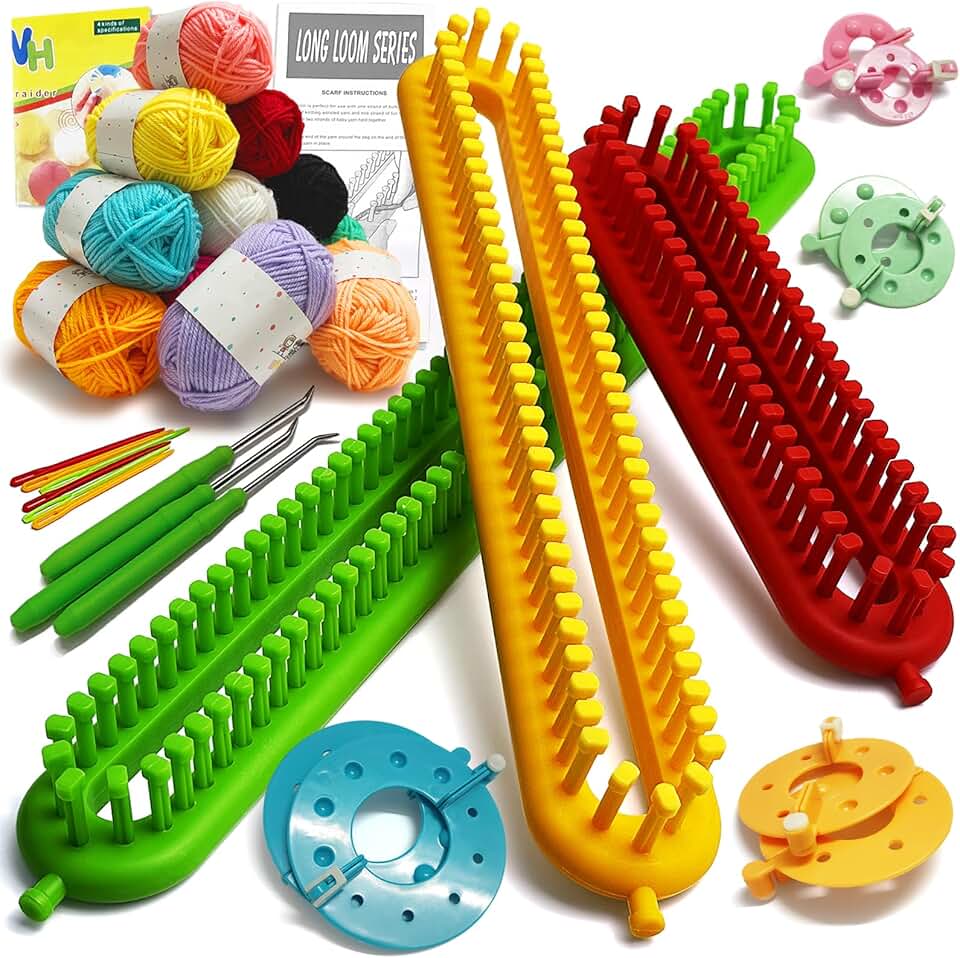
Flat looms, often called rectangular or board looms, are the workhorses of the knitting world. They are designed to create wide, flat sheets of fabric rather than tubes. This makes them the ideal choice for those who want to make scarves, afghans, pillow covers, or lap blankets without the complexity of circular knitting.
The geometry of a flat loom simplifies the process significantly. Because the fabric lies flat on your lap, you can easily see every stitch as you work. This visibility helps new knitters catch mistakes early and keep track of their progress, which is often a source of anxiety for beginners. The rhythmic motion of wrapping and hooking is gentle on the wrists and hands, making it a comfortable way to learn the craft.
Many flat looms come in adjustable sizes, allowing you to change the width of your project. This versatility means you can use the same tool for a narrow scarf or a wide blanket by simply adjusting the peg spacing or adding extenders. The speed at which you can produce fabric is also a major advantage; flat looms allow you to "crank out" projects much faster than traditional needles, providing quick satisfaction for new learners.
While the gauge (stitch size) is fixed by the loom's peg spacing, this consistency is actually a benefit for beginners. You don't need to worry about tension variations affecting the look of your fabric. The result is a neat, uniform texture that looks professional even on your first attempt.


As an Amazon Associate, we may earn from qualifying purchases.
Complete kits vs. individual looms
Choosing between a starter kit and buying components separately often comes down to convenience versus control. Starter kits are designed to lower the barrier to entry, bundling a loom, yarn, and a hook into one package. This approach is ideal for those who want to start knitting immediately without researching specific gauge sizes or yarn weights. The downside is that the included yarn is often thinner or lower quality than what you might select on your own, which can affect the drape and warmth of your finished projects.
Purchasing items separately allows for better quality control and customization. You can choose a loom made from durable materials like wood or high-grade plastic and pair it with a yarn weight that suits your specific project needs. This method requires a bit more initial effort to ensure all components work together, but it typically results in a more professional-looking final product. It is also a more sustainable choice if you plan to expand your collection later, as you can replace individual items rather than an entire bundle.
The table below compares the typical trade-offs between these two purchasing paths to help you decide which fits your budget and goals.
| Feature | Starter Kit | Individual Parts |
|---|---|---|
| Ease of Start | Very High – Everything in one box | Moderate – Requires research |
| Yarn Quality | Basic or thin acrylic blends | Customizable – Choose premium fibers |
| Cost Efficiency | Higher upfront cost per item | Lower overall if you already own tools |
| Project Versatility | Limited to kit’s included gauge | High – Mix and match loom sizes |
If you are unsure which path to take, consider your immediate goals. A kit is perfect for testing the waters to see if you enjoy the craft. If you are committed to making specific items like scarves or hats, buying a loom and yarn separately ensures you have the right tools for the job from the start.
Essential accessories for loom knitting
Starting loom knitting doesn’t require a massive investment, but skipping the basics can make the learning curve steeper than it needs to be. The right accessories turn a frustrating first project into a smooth, satisfying experience. Think of these tools as the scaffolding that holds your new hobby together while you build confidence.
The U-hook is non-negotiable
You cannot complete a loom knit project without a U-hook. This specialized tool is designed to lift loops over pegs without snagging or stretching the yarn. A standard crochet hook often works in a pinch, but the U-hook’s shape matches the loom’s pegs perfectly, making the repetitive motion faster and easier on your hands. Look for one with a comfortable, ergonomic handle to reduce strain during longer projects.
Stitch markers and yarn guides
Stitch markers help you keep track of your starting point or pattern repeats, which is especially helpful when you are just learning to count stitches. Yarn guides or tensioners are equally useful; they prevent the yarn from tangling or dropping loops as you work. These small, inexpensive additions keep your workflow uninterrupted, allowing you to focus on the rhythm of knitting rather than untangling knots.
Building your starter kit
Instead of buying individual items, consider curated bundles that include a loom, hook, and basic accessories. This approach ensures you have everything needed to start immediately without guessing what else to buy. Many beginner sets also include a guide or pattern book, which provides immediate direction and reduces the overwhelm of starting from scratch.


As an Amazon Associate, we may earn from qualifying purchases.
Loom knitting pros and cons
Loom knitting offers a distinct advantage in speed. Once you master the basic wrap, you can crank out scarves and hats much faster than with traditional needles. This efficiency makes it feel almost mindless, allowing you to produce finished items in a short amount of time. Many beginners find this pace encouraging, turning a complex craft into a relaxing, repetitive rhythm.
The trade-off is a fixed gauge. Unlike needle knitting, where you choose your yarn weight and hook size to control fabric tightness, a loom’s peg spacing dictates the stitch size. You cannot adjust the gauge mid-project. This limitation means loom knitting is best for items like cowls, scarves, and loose-fitting hats, where precise sizing is less critical.
However, the ease of use often outweighs this constraint for newcomers. The open pegs make it easy to see your stitches and track your progress, reducing the anxiety of dropped loops. For those seeking a gentle entry into fiber arts, the speed and visibility of loom knitting provide a forgiving, accessible path to creating wearable goods.
No comments yet. Be the first to share your thoughts!