

The state of automated knitting
Knitting is moving away from manual looms toward computer-controlled systems. These machines use carriages and needles to build fabric directly from digital files, cutting down the physical labor usually required for complex patterns. While the tech is still maturing, it's changing how small studios and factories handle production.
At their core, these machines use computer-controlled carriages and needles to create knitted fabric based on digital designs. Traditional knitting relies heavily on manual skill and repetitive motions. AI machines, however, can interpret complex patterns and execute them with precision. Early adoption was driven by the desire to address rising labor costs and the growing demand for personalized products. But those early machines had limitations – slow speeds, limited yarn types, and a steep learning curve.
Current machines are faster and handle more yarn types than earlier models. While a machine won't design a sweater from scratch yet, the automation is practical. We have systems that can now optimize stitch density on the fly and stop the carriage if they detect a dropped loop or a knot in the yarn.
The biggest change isn’t just the machines themselves, but the software that powers them. The ability to seamlessly translate digital designs into machine-readable code is what’s really unlocking the potential of this technology. It’s a complex process, and the quality of the software is often the deciding factor between a successful production run and a frustrating experience.

Comparing Kniterate and Shima Seiki
Kniterate and Shima Seiki are the main players right now, but they serve different worlds. Kniterate makes a compact machine for small studios and makerspaces. It's built for prototyping and short runs, focusing on a simpler interface for people who might not have a background in industrial textiles.
Kniterate’s machines are relatively affordable – though still a significant investment – and they’ve invested heavily in software development. Their platform allows designers to create and edit patterns directly, then send them to the machine for execution. They promote a community-driven approach, offering support and resources to help users get the most out of their machines. They really aim for a plug-and-play experience, something appealing to those without a traditional textile background.
Shima Seiki, on the other hand, has a long history in the industrial knitting machine market. They cater to large-scale manufacturers and offer a wide range of machines capable of producing everything from basic knitwear to complex, fully-fashioned garments. Their machines are significantly more expensive and complex than Kniterate’s, requiring specialized training and expertise to operate. They're a long-established name, known for reliability and output.
The key difference lies in their philosophies. Kniterate is about democratizing textile production, making it accessible to a wider audience. Shima Seiki is about optimizing production efficiency for established manufacturers. Shima Seiki’s software integration is also more geared towards existing CAD/CAM systems used in the apparel industry, while Kniterate’s platform is designed to be more self-contained. Both companies are actively incorporating AI into their machines, but their focus areas differ. Shima Seiki emphasizes AI for quality control and process optimization, while Kniterate explores AI-assisted design and pattern generation.
Choosing between the two depends heavily on your needs and resources. A small design studio looking to create custom knitwear might find Kniterate to be a perfect fit. A large manufacturer seeking to automate their production processes would likely turn to Shima Seiki. The Instagram post mentioning an $80,000 machine (instagram.com) likely refers to a Shima Seiki model, emphasizing the price difference between these industrial-grade machines and consumer-focused options.
Moving designs from screen to needle
Getting a design from your computer into an AI knitting machine isn’t as simple as pressing "print." These machines require specific file formats and a different way of thinking about pattern creation. Traditionally, knitting patterns are written using a combination of text instructions and charts. AI machines, however, typically accept files in formats like .stb, .kfn, or proprietary formats specific to the machine manufacturer.
This necessitates a translation process. Several software options are available for creating and editing patterns for AI knitting machines. Kniterate’s software is a prime example, offering a visual interface for designing and manipulating stitch patterns. Other options include specialized CAD software like Lectra Modaris or Tukatech, which can export files in compatible formats. However, these professional tools often come with a steep learning curve and a hefty price tag.
The level of coding knowledge required varies. Some software packages offer a drag-and-drop interface, allowing you to create patterns without writing any code. Others require you to understand the underlying programming logic of the machine. This can involve learning a specific scripting language or using a graphical programming environment. There is a gap between traditional knitting patterns and the digital requirements of these machines, and bridging it requires some investment in learning new skills.
Converting existing patterns can be a challenge. While some software offers import features, they’re often limited and may require manual adjustments. The best approach is often to recreate the pattern from scratch, optimizing it for the capabilities of the machine. AI pattern tools, as noted by fashioninsta.ai, are emerging to help streamline this process, offering automated conversion and optimization features, but they are still under development.
- Design the pattern in software like Kniterate's web app or specialized CAD tools.
- File Export: Export the pattern in the required file format (.stb, .kfn, etc.).
- Machine Import: Import the file into the knitting machine’s software.
- Parameter Adjustment: Adjust machine parameters (yarn tension, stitch size, etc.).
- Production: Start the knitting process.
How the algorithms actually work
The 'AI' in AI knitting machines isn’t about the machines independently conceiving of fashion trends. Instead, it’s about using algorithms to optimize the knitting process and improve the quality of the finished product. These algorithms analyze various factors – yarn type, stitch pattern, desired fabric properties – to select the optimal stitch structures and machine settings.
A key application of AI is in reducing yarn waste. By intelligently adjusting stitch patterns, the machine can minimize the amount of yarn needed to create a garment, leading to cost savings and reduced environmental impact. AI is also used for error detection. The machine can analyze the knitted fabric in real-time and identify any defects, such as dropped stitches or uneven tension. This allows for early intervention, preventing the production of faulty garments.
Some machines are beginning to experiment with AI-powered pattern generation. These systems can create new stitch patterns based on user-defined parameters, such as desired texture or drape. This is still an emerging area, and the results are often experimental, but it holds promise for designers looking to explore new creative possibilities. The algorithms aren’t truly "intelligent’ in the human sense; they"re based on complex mathematical models and machine learning techniques.
However, the potential is significant. As AI algorithms become more sophisticated, we can expect to see machines that are capable of adapting to different yarn types, optimizing stitch structures for specific applications, and even learning from their mistakes. This will lead to more efficient production, higher-quality fabrics, and greater design flexibility.
Beyond Fashion: Niche Applications
While fashion is the most obvious application for AI knitting machines, their versatility extends far beyond clothing. The ability to create customized, high-performance fabrics opens up opportunities in a range of niche markets. Medical textiles are a prime example. AI knitting machines can be used to produce compression socks with precise pressure gradients, bandages with embedded sensors, or even customized prosthetic liners.
Industrial applications are also emerging. Specialized fabrics with unique properties – such as high strength, chemical resistance, or electrical conductivity – can be created for use in filters, protective gear, or composite materials. The ability to create complex 3D structures opens up possibilities for creating lightweight, high-performance components for aerospace or automotive applications.
The technology also lends itself to artistic expression. Artists are using AI knitting machines to create intricate textile sculptures and installations. The precision and control offered by these machines allow for the creation of complex geometries and textures that would be impossible to achieve with traditional hand-knitting techniques.
Perhaps the most significant potential lies in localized, on-demand manufacturing. AI knitting machines can be deployed in small workshops or even individual homes, allowing for the creation of customized products without the need for large-scale factories. This could revolutionize the supply chain, reducing lead times and minimizing waste.
- Medical gear like compression socks and prosthetic liners that require variable tension.
- Industrial Fabrics: Filters, protective gear, composite materials.
- Art Installations: Textile sculptures, complex geometries.
- Localized Manufacturing: On-demand production, reduced waste.
Emerging Applications
- Aerospace Components - Lightweight, high-strength knitted structures are being explored for use in aircraft interiors and potentially even exterior components, offering weight reduction and impact absorption.
- Architectural Textiles - Knitted fabrics can be engineered for dynamic building facades, responding to environmental conditions like sunlight and temperature with integrated sensors and actuators.
- Custom Prosthetics - AI-driven knitting allows for the creation of highly personalized prosthetic sleeves and sockets, offering improved fit, comfort, and functional integration.
- Medical Implants (Scaffolds) - Knitted structures provide a porous, biocompatible framework for tissue regeneration in medical implants, promoting cell growth and integration with the body.
- Automotive Interior Paneling - Knitted materials offer a unique aesthetic and acoustic dampening properties for automotive interiors, potentially replacing traditional plastic components.
- Personalized Orthotics - AI-powered machines can create custom-fit orthotic insoles and supports based on individual foot scans and biomechanical data, improving comfort and support.
- Protective Sports Gear - Knitted fabrics with integrated impact-absorbing materials are being developed for protective gear in sports like cycling and American football, offering flexibility and safety.
Future Trends & Open Questions
The future of AI-powered knitting is full of possibilities. We can expect to see further advancements in AI algorithms, leading to even more optimized stitch structures and automated pattern generation. Materials science will also play a role, with the development of "smart yarns" that can change color or shape in response to external stimuli. Machine capabilities will continue to improve, with faster speeds, wider knitting widths, and the ability to handle a wider range of yarn types.
However, several open questions remain. Data security is a concern, as the designs and patterns used by these machines are valuable intellectual property. Protecting this data from unauthorized access is crucial. Intellectual property protection is also a challenge, as it can be difficult to prevent the unauthorized copying of knitted designs. The impact on the knitting workforce is another important consideration. As machines become more automated, there is a risk of job displacement.
Another area of development will be integrating these machines into broader digital workflows. Imagine a seamless connection between design software, pattern creation tools, and the knitting machine itself, allowing for a fully automated production process. We may also see the emergence of new business models, such as "knitting-as-a-service," where designers can rent time on AI knitting machines to create their products.
Ultimately, the success of AI-powered knitting will depend on overcoming these challenges and realizing the full potential of this transformative technology. It’s a dynamic field, and the next few years will be crucial in shaping its future.
Featured Products

Set of 7 essential transfer tools · Compatible with 4.5mm knitting machines · Designed for Brother KH860, KH868, KH940 models
This accessory set is crucial for expanding the design possibilities and pattern transfers on compatible Brother knitting machines.

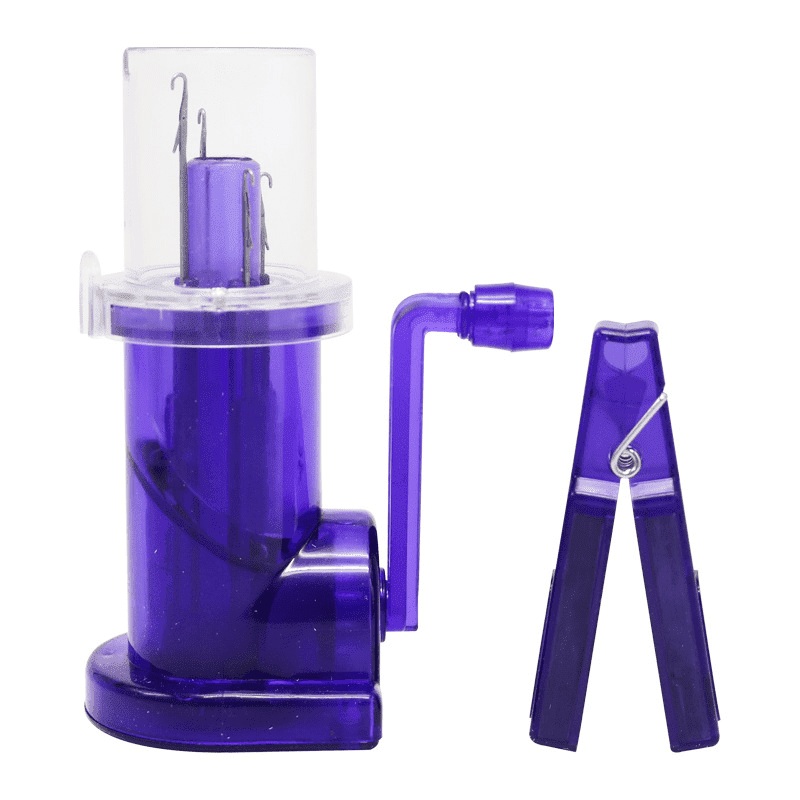
48 needles for versatile knitting · Includes a row counter for precise stitch tracking · Suitable for creating hats, socks, and other items
An accessible entry-level option, this machine simplifies the creation of basic knitted items and introduces users to automated knitting with its row counter.
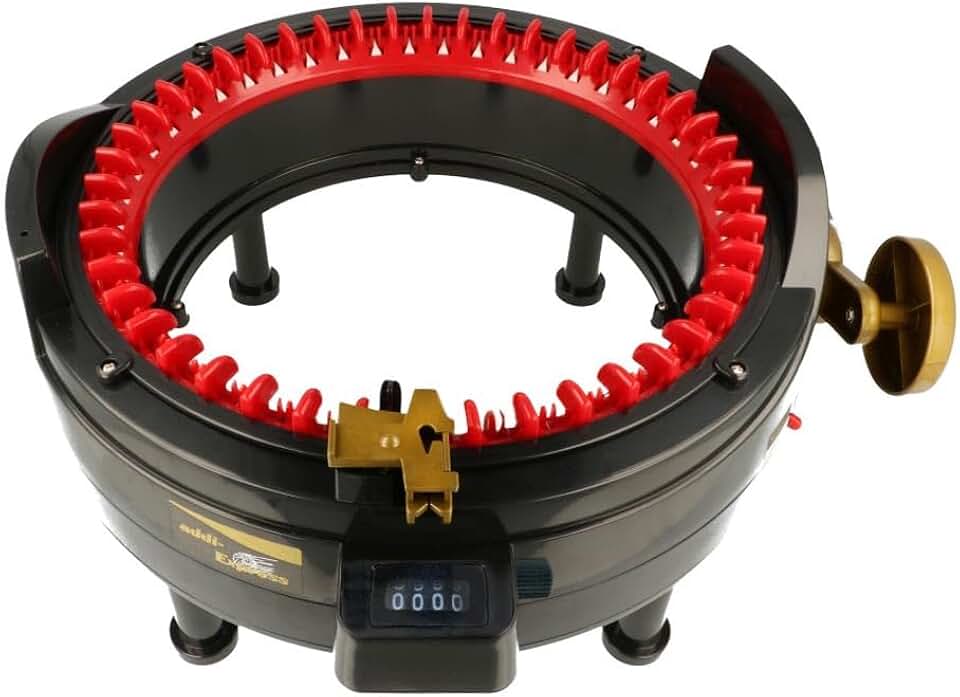
46 needles for knitting larger projects · Equipped with a row counter · Features a hand crank for operation and a 17.7-inch flat panel width
This machine offers a larger knitting capacity and integrated row counter, making it efficient for producing wider knitted panels and garments.

6.5mm mid-gauge for a variety of yarn weights · 150 stitches capacity · Automatic knitting with included accessories
The LK150 provides a mid-gauge option for greater yarn flexibility and a higher stitch count, enabling more complex and varied knitted fabric designs.
As an Amazon Associate I earn from qualifying purchases. Prices may vary.
Community Reactions & Early Adopters
Online knitting communities are buzzing with discussion about AI knitting machines. Forums like Ravelry and Reddit’s r/knitting often feature threads asking about the feasibility of these machines for small-scale production, and the learning curve involved. Many users express excitement about the potential for customization and speed, but also concerns about the cost and complexity.
Early adopters are sharing their experiences on social media. Several independent designers are using Kniterate machines to create and sell custom knitwear online, showcasing the possibilities for personalized fashion. These early experiences are invaluable, providing insights into the practical challenges and benefits of the technology. Many are highlighting the time savings and the ability to offer unique designs that would be difficult or impossible to create by hand.
The general consensus seems to be that AI knitting machines are still evolving, but they represent a significant step forward in textile production. While they may not replace traditional hand-knitting entirely, they offer a powerful tool for designers, manufacturers, and anyone interested in exploring the future of fashion.
No comments yet. Be the first to share your thoughts!