

Budget Fit: Balancing Price, Age, and Condition
The market for knitting machines is split between entry-level plastic models and durable metal bed machines, with the gap between them defined by build quality and longevity. If you are considering an upgrade for intarsia or loom knitting, your budget will determine whether you buy a new entry-level unit or hunt for a used industrial workhorse.
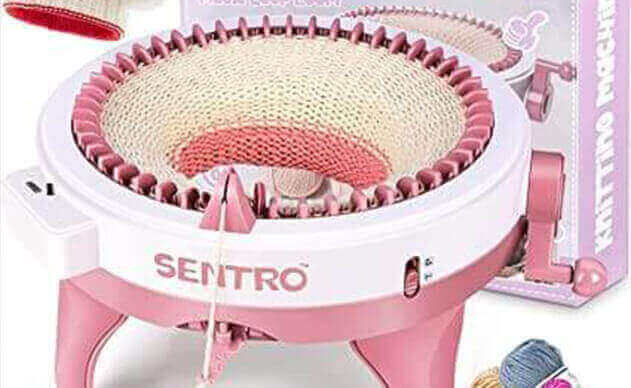
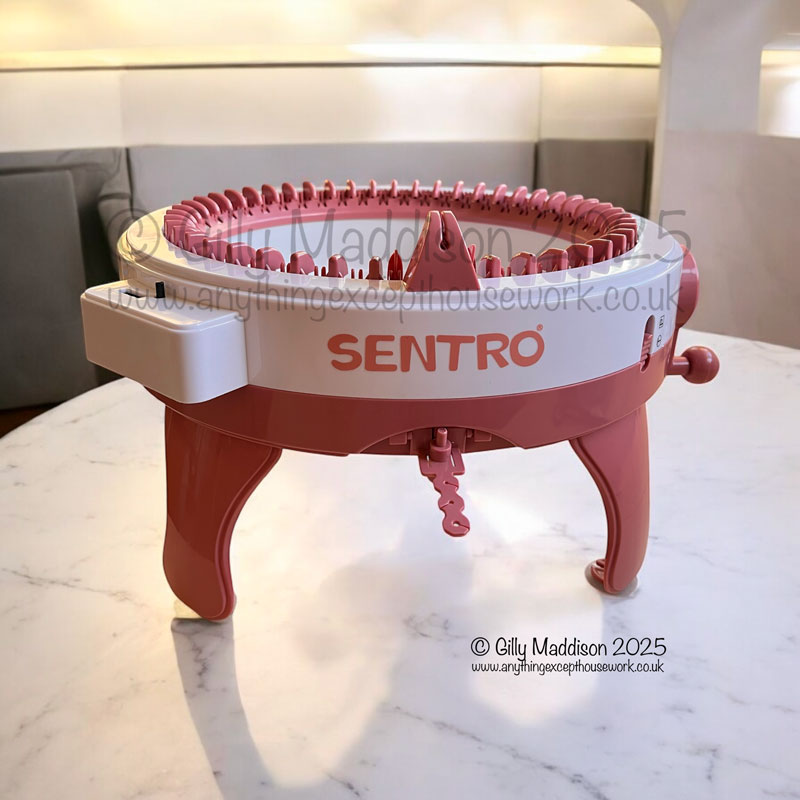
For beginners, the Sentro knitting machine remains the most cited entry point. It is affordable, easy to use, and does what it promises—turning out knit items faster than hand knitting. However, it is not the most advanced machine out there, and its plastic construction limits the complexity of patterns you can tackle. It is a solid starting point if you are unsure how much you will enjoy machine knitting, but it may not hold up to heavy, daily use.
When the budget stretches to $300–$600, you enter the territory of used domestic machines like the Brother KH910 or Singer 400 series. These metal-bed machines are built to last decades, but age and condition are critical factors. A well-maintained used machine offers far better stitch quality and versatility for intarsia than a brand-new plastic model. Always inspect the bed for rust and check the carriage tension before buying. For those who prefer new equipment in this range, the Addi Express provides a simple, reliable alternative for tubular knitting, though it lacks the pattern capabilities of a full flatbed machine.


As an Amazon Associate, we may earn from qualifying purchases.
Used industrial machines, often found for under $200, are another budget option. These are heavy, loud, and require a dedicated space, but they produce professional-grade fabric. The tradeoff is that they are not user-friendly for complex colorwork like intarsia without significant modification. If your goal is speed and durability over versatility, a used industrial machine is a smart financial move. If you need flexibility for different projects, stick to a used domestic model or a new entry-level plastic machine.
Shortlist real options
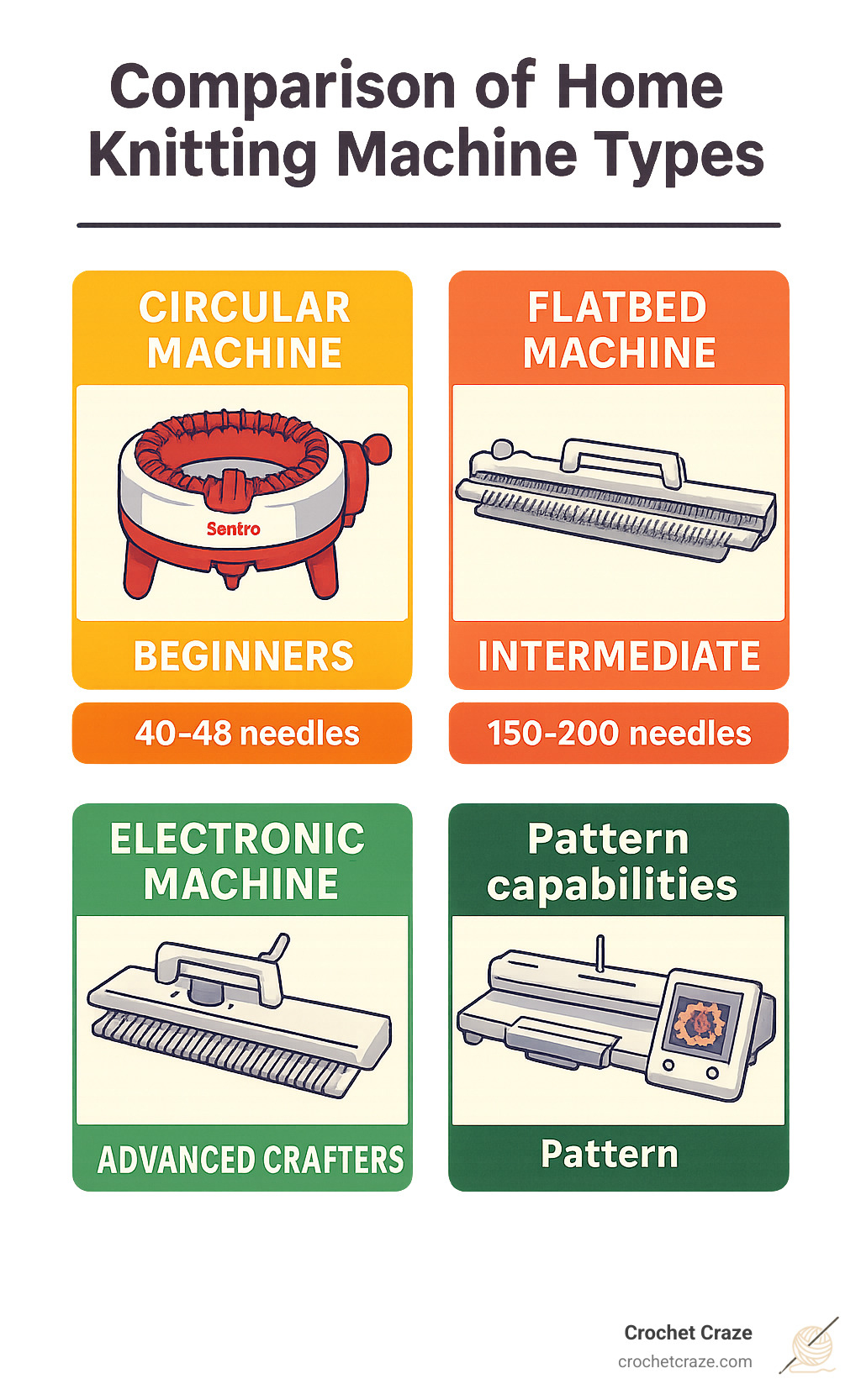
Choosing the right knitting machine depends on whether you prioritize speed for simple tubes or precision for complex patterns. Below is a comparison of the most frequently recommended models in the market, ranging from entry-level looms to professional flatbeds.
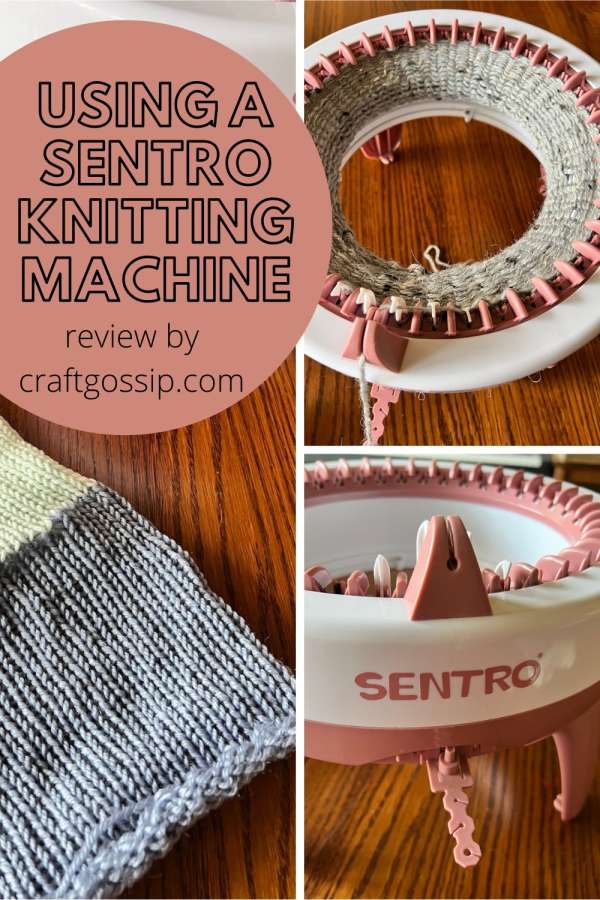
The Sentro 48-Needle is often the starting point for those curious about machine knitting. It is affordable and easy to use, producing perfect adult-sized tubes quickly. However, it is limited to circular knitting, meaning you cannot create flat garments like sweaters or shawls without sewing them together later. It is excellent for accessories but lacks the versatility of flatbed machines.
For those interested in intarsia and loom knitting techniques that require flat fabric, the Brother LK150 is the most popular entry-level choice. It is mechanically simple, making it easier to learn than electronic models. While it lacks automatic patterning, it offers a reliable way to knit flat panels, cables, and basic textures. The Silver Reed SK280, by contrast, offers automatic patterning that is considered amazing for complex designs, but it comes with a steeper learning curve and higher cost.


As an Amazon Associate, we may earn from qualifying purchases.
The Brother KH910 and Silver Reed SK280 represent the higher end of the market. The KH910 is favored by those who want automated patterning without the full complexity of the SK280. The SK280 is a powerhouse for intarsia, allowing for precise color blocking that is difficult to achieve manually. These machines require a dedicated workspace and a willingness to invest time in mastering their mechanisms.
Inspect the expensive parts
Before you commit to an upgrade, look closely at the components that actually break. Machine knitting relies on precise mechanical timing, and when one part fails, the whole project can unravel. Focus your inspection on the carriage, the bed, and the tension system.
The carriage wheels are the most frequent point of failure. They must roll smoothly without wobbling or catching. If the wheels are worn, they will leave gaps in your knitting or cause the carriage to drag. This is especially critical for intarsia, where smooth movement is required to manage multiple yarn colors.
Run a finger along the needle bed to check for bent needles or lint buildup. Bent needles will snag yarn and ruin your fabric. Also, look for rust or corrosion, particularly on older models. Even a small amount of rust can increase friction, making it harder to knit and potentially damaging your yarn.
The tension dial controls the tightness of your stitches. Turn it through its full range to ensure it clicks into place at each setting. If the dial feels loose or slips, the tension will be inconsistent, leading to uneven fabric. This is a common issue on budget models, so test it thoroughly before buying.
The yarn carrier holds and feeds the yarn. Check that it spins freely and that the tension spring is intact. A stiff or broken carrier will cause yarn breaks or uneven tension. If you plan to do complex patterns like intarsia, ensure the carrier can handle multiple yarns without tangling.
By focusing on these specific parts, you can avoid costly repairs down the line. A machine with worn wheels or a faulty tension dial will frustrate you more than it helps. Take the time to inspect these areas carefully, and you’ll be better prepared to choose a machine that lasts.
Plan for ownership costs
The sticker price of a knitting machine is rarely the final bill. Beyond the purchase, you need to budget for maintenance, specialized yarns, and the time required to learn the mechanics. A cheap machine that breaks after three projects often costs more in the long run than a mid-range model built with metal gears.
Maintenance and repairs
Knitting machines require regular cleaning and oiling to keep the needles moving smoothly. Lint and old yarn fibers accumulate in the bed, causing missed stitches or broken needles. If you buy a budget model, check if replacement parts are available. Many inexpensive machines use proprietary parts that are hard to source, turning a simple repair into a reason to buy a new machine entirely.
Yarn and tool costs
Not all yarn works well on all machines. Thin, slippery, or highly textured yarns can jam the carriage or fall out of the hooks. You may need to buy specific yarn weights that are more expensive per ounce than standard hand-knitting yarn. Additionally, you will need basic tools like stitch holders, a darning needle, and possibly a tension calculator to get consistent results.
When cheap stops being cheap
If you plan to knit frequently, the time spent troubleshooting a low-quality machine adds up. A machine with loose tension dials or a wobbly carriage will produce uneven fabric, requiring you to rip back and re-knit. For occasional hobbyists, a basic model like the Sentro might suffice, but for those serious about intarsia or complex patterns, investing in a more durable machine with better support is usually the smarter financial move.


As an Amazon Associate, we may earn from qualifying purchases.
Knitting machine reviews: common: what to check next
Before committing to a machine, it helps to separate hobbyist curiosity from serious craft. The answers below address the practical objections readers raise when comparing models like the Silver Reed LK150, the Addi King Size, or the Sentro.
No comments yet. Be the first to share your thoughts!